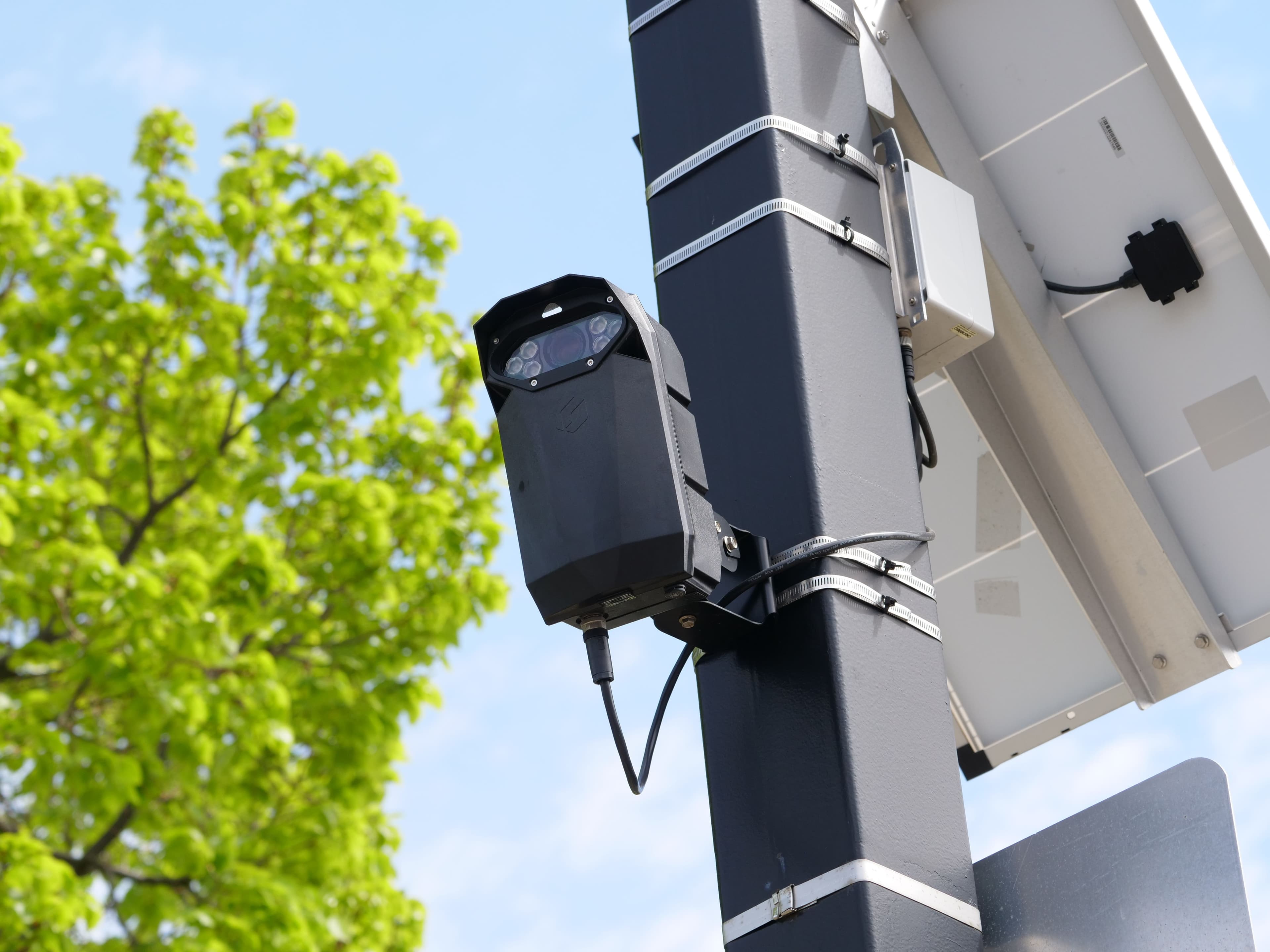
Westland Is Taking Down Its Flock Cameras. The Bigger Question Is What Happens to the Data
The city is ending its relationship with Flock Safety after two years of using automated license plate readers. Now residents are left with questions about what was collected, who could access it and how long that information will remain available.
Westland is getting rid of its Flock Safety cameras.
That decision was announced last month after months of debate over privacy, surveillance and who could access information collected by the automated license plate readers. Police Chief Kyle Dawley decided not to bring a renewal contract to the City Council after discussions with council members showed the council was deeply divided over the technology.
But the cameras did not disappear when the contract ended.
As of early August, the cameras were still installed around Westland. Local 4 reported that the city has 29 Flock cameras that are being removed as the contracts expire. A separate July report from Local 4 referred to the city having 10 Flock cameras, raising a basic question that deserves a clear answer from the city: How many Flock cameras did Westland actually have, and why have different numbers been publicly reported?
The answer matters because these were not ordinary security cameras.
Flock's system uses automated license plate readers to capture information about vehicles traveling through areas where cameras are installed. Police can search that information during investigations.
Westland approved the purchase of 10 automated license plate readers from Flock Safety in July 2024 for a two-year term at a cost of $67,100. The city also approved a separate Axon agreement for activation of the ALPR function on existing police camera equipment.
The technology became increasingly controversial as residents began questioning what happens to information about people who were not suspected of committing a crime.
The privacy question
Councilwoman Melissa Sampey said residents repeatedly raised concerns about privacy and who could access the information.
Westland Police said the department had demonstrated to council members how it uses the technology and explained its agency-specific policy governing its use. After those discussions, Chief Dawley decided not to seek renewal.
Council President Mike McDermott also opposed continuing the program, citing privacy and constitutional concerns and questions about corporate data-sharing practices and access by outside agencies.
Not everyone agreed with the decision.
Flock Safety defended its technology, saying license plate reader systems have helped law enforcement investigate violent crimes, locate missing people and investigate other incidents. The company argued that removing the technology could make some investigations more difficult.
That is an argument worth hearing.
But it is not the end of the story.
What happens to the information?
This may be the most important question for Westland residents now.
The cameras are coming down, but the information collected while they were operating does not necessarily disappear simply because a camera is removed.
Local 4 specifically reported on August 12 about the question of what happens to Flock camera data after the cameras come down.
Michigan Public also reported this month that Flock changed its default data retention policy from 30 days to seven days.
That makes the city's own policies and contract particularly important.
Residents deserve to know exactly what Westland's agreement with Flock says about data retention after the contract expires.
They also deserve to know whether information collected by Westland's cameras was available to agencies outside Westland, how many searches were conducted, how often outside agencies accessed the system and whether the city has a record of those searches.
Those are not hypothetical questions. They go directly to what the city bought and how the technology was used.
Westland paid for the system. What did residents get?
The city's original 2024 agreement shows that Westland paid $67,100 for the 10 ALPR units over two years.
The city has also publicly discussed crime-solving results associated with Flock. In May, Westland Downtown Development Authority meeting minutes noted that a board member provided an update on crime-solving statistics related to the use of Flock Safety cameras.
But those statistics have not yet answered some basic questions residents should be able to ask.
How many crimes did the cameras actually help solve in Westland?
How many arrests resulted from Flock searches?
How many investigations were assisted by the system?
How many searches were conducted during the two-year contract?
How many searches involved vehicles that were not connected to a crime?
And how often was Westland's data accessed by another law enforcement agency?
We don't have those answers yet.
This is not about being for or against cameras
There is a legitimate public safety argument for automated license plate readers.
There is also a legitimate privacy argument against creating a system capable of recording where vehicles travel.
Both arguments deserve to be heard.
The question for Westland now is whether the city can provide residents with a clear accounting of what happened during the two years the system was operating.
The cameras are coming down.
The questions should not.
Voice of Westland will be seeking the contracts, data-retention policies, usage statistics, access records and other public records related to Westland's Flock system.
If the technology helped police solve crimes, residents deserve to know how much it helped.
If there were privacy concerns or problems with access, residents deserve to know that too.
And if the city spent $67,100 on the system, residents deserve to know exactly what they received for that money.
We will follow the records.
Brian R. Hopkins
Editor-in-Chief, Voice of Westland